
Student Apartment in Budapest — What Nobody Tells You (2026 Guide)

Most advice about renting in Budapest was written for a market that no longer exists. Prices have shifted. Demand from international students keeps growing. And the “tips” you find online are usually recycled from five years ago by people who never lived here.
This guide is different. It comes from years of working with students, landlords, and property owners across Budapest — and from watching hundreds of students make the same avoidable mistakes. Whether you are arriving at Semmelweis, Corvinus, ELTE, or BME, here is what the 2026 rental market actually looks like.
Location is not just important. It is the decision.

The number one mistake students make when renting in Budapest: they find the cheapest apartment they can afford, sign the lease, and then spend 90 minutes every day getting to class and back.
That math never works. Not financially. Not for your grades. Not for your mental health during exam season.
Here is the reality. As a student, time is the one thing you never have enough of. Classes, labs, studying, eating, sleeping — your schedule is already full before you even think about a social life. Every extra 15 minutes of commute is 15 minutes stolen from something that matters more.
Living close to your faculty means you can walk home after a late library session instead of waiting for a night tram. It means you eat a proper meal instead of grabbing something on the metro. It means you actually sleep before an 8am exam.
Whether you study at Semmelweis, Corvinus, ELTE, or BME — proximity to your campus should be the first filter, not the last.
If you cannot live near campus, live near a fast line
Not everyone can afford an apartment next to their university. Budget, availability, and timing all play a role. But here is the good news: Budapest has one of the best public transport systems in Europe. If you choose the right connection, you can reach any major point in the city within 20 to 30 minutes.
The key is choosing an apartment near one of the lines that actually matter for students.
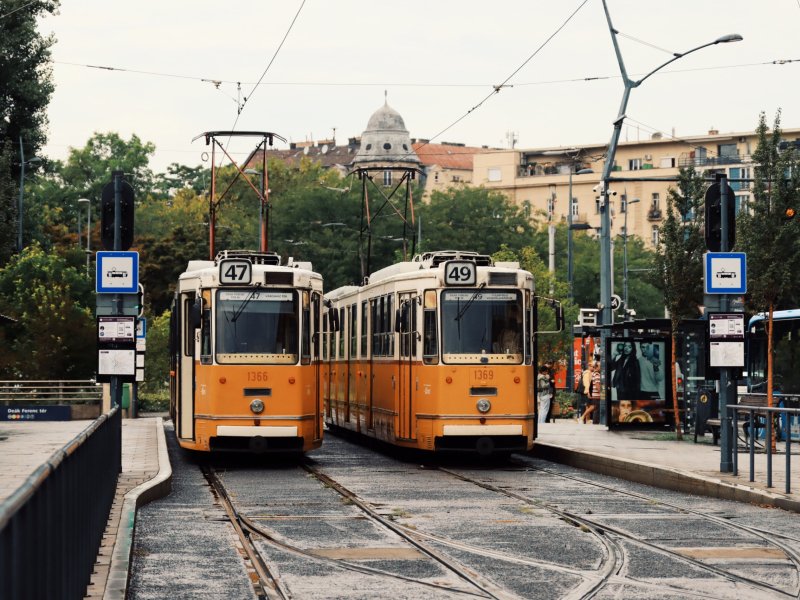
The 4/6 tram — your most reliable option
The 4/6 tram runs 24 hours a day, seven days a week, including holidays. It crosses the entire Pest side of the city and connects to almost every major transport hub. If your apartment is within a five-minute walk of a 4/6 stop, you are already well-connected.
This line passes through Széll Kálmán tér on the Buda side, Nyugati station, Oktogon, Blaha Lujza tér, and Corvin-negyed — all of which are major connection points for the metro, bus routes, and night services. It also runs past several shopping centres and grocery stores, which matters more than you think when you are living on a student schedule.
For most students in Districts VI, VII, and VIII, the 4/6 tram is not just convenient. It is essential.
Metro Line 3 — the backbone of north-south travel
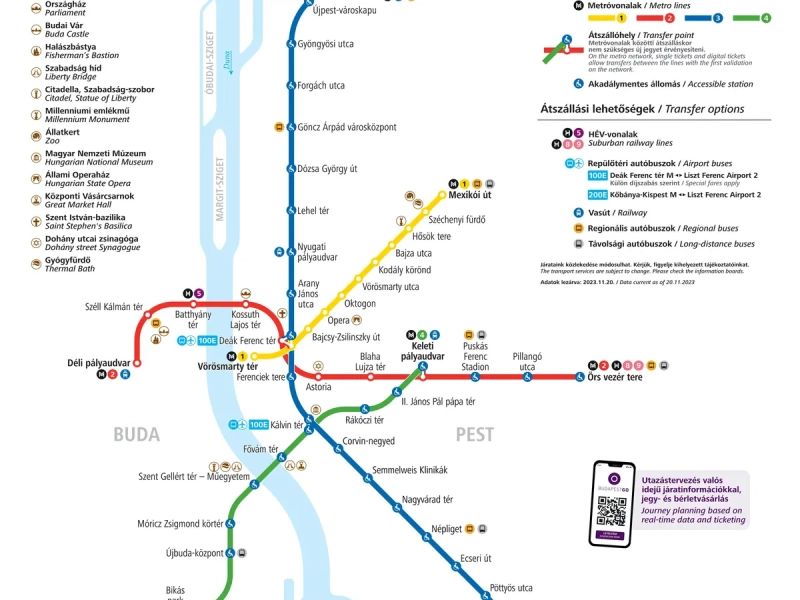
Metro Line 3 runs from Újpest-Központ in the north to Kőbánya-Kispest in the south, cutting straight through downtown Budapest. After recent renovations, the stations and trains are modern, clean, and significantly more comfortable than before.
For students, the stations that matter most are these:
Deák Ferenc tér is the central nerve of Budapest transport. All three metro lines meet here. You are within walking distance of the city centre, surrounded by bus stops, tram connections, and night routes. If you live near Deák, you are never more than one connection away from anywhere.
Kálvin tér connects to Metro Line 4 and gives you direct access to Semmelweis University and several ELTE faculties. It is surrounded by libraries, restaurants, and airport bus stops. For students who need to be near campus without paying District V prices, this is one of the smartest locations in the city.
Nyugati pályaudvar sits right next to WestEnd City Center, one of Budapest’s largest shopping malls. It connects to the 4/6 tram, regional trains, and several bus routes. Nearby you will find gyms, grocery stores, pharmacies, and affordable cafés.
Corvin-negyed intersects with the 4/6 tram and Metro Line 3. Corvin Plaza is right there, along with fitness centres, cheap restaurants, and a growing number of modern apartments. For daily life as a student — groceries, gym, fast travel, reasonable rent — Corvin-negyed is hard to beat.
Other areas worth considering
If you are flexible on exact location but still want strong transport access, these neighbourhoods consistently work well for students:
Astoria is close to ELTE, central, and has excellent tram and bus connections. Oktogon sits on the 4/6 tram line near Andrássy Avenue. Király utca is in the middle of District VII — lively, walkable, with quick tram access. Wesselényi utca puts you near universities in Districts VI and VII. Mester utca is close to Semmelweis facilities and has a growing number of renovated apartments. Ferenciek tere is central, relatively quiet, and close to essential student services.
Blaha Lujza tér is well-connected but worth noting: it is one of the busiest and noisiest intersections in Budapest. Some students find it overwhelming as a daily environment. If noise bothers you, check the specific street before signing anything.
The principle is simple. You are not just renting an apartment. You are choosing how much of your day gets spent in transit versus doing the things that actually matter.
Groceries and daily life — the thing nobody talks about

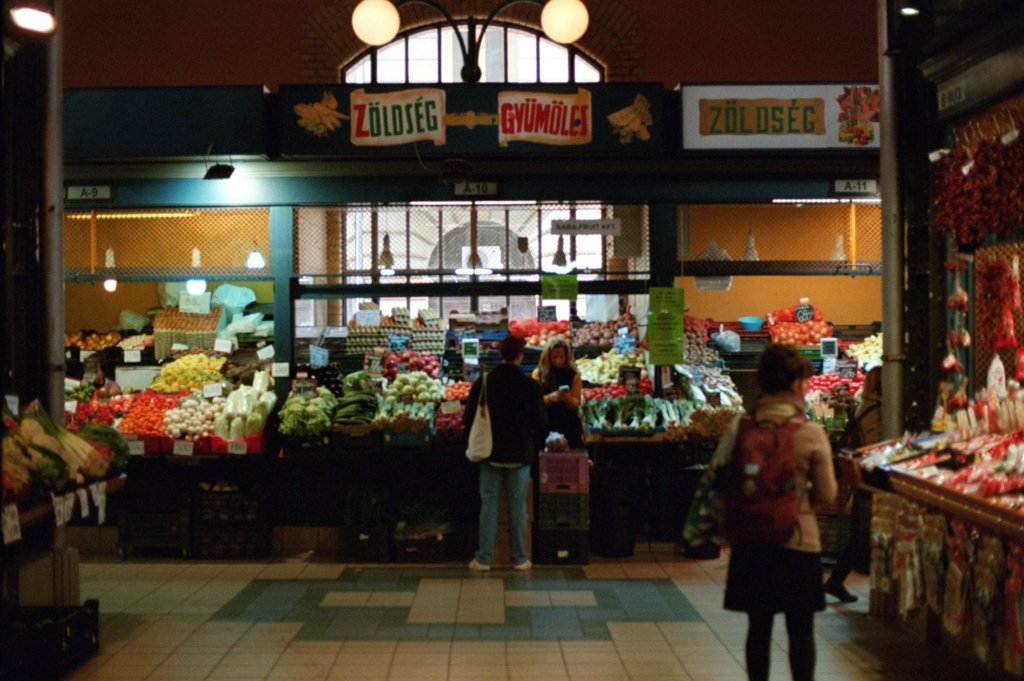
When students ask about apartments, they always ask about rent and location. Almost nobody asks about groceries, pharmacies, or whether there is a bakery within walking distance. Then they move in and realise they have to take a tram to buy bread.
Before you sign a lease, open Google Maps and check what is within a five to seven minute walk of the apartment. Here is what to look for.
Grocery stores. Lidl is the student favourite — affordable, fresh produce, efficient layouts. Aldi and Penny Market are similarly budget-friendly. Spar and Interspar have wider selection but cost a bit more. Tesco Express works well for quick trips. Príma is well-stocked and central, but noticeably more expensive.
Pharmacies and bakeries. Having a pharmacy (gyógyszertár) nearby saves you a trip across town when you are sick during exam week. Bakeries (pékség) are everywhere in Budapest and serve fresh bread, pastries, and cheap breakfasts. Nonstop shops and ABC stores stay open late or around the clock — useful after a long study session or a night out.
Shopping centres near student areas. Corvin Plaza is right at Corvin-negyed station. WestEnd City Center sits at Nyugati. Arena Mall is accessible from Metro Line 2 at Stadionok. Mammut Mall is on the Buda side at Széll Kálmán tér. These are where you go for school supplies, phone chargers, winter clothes, or a quick lunch between classes.
A practical tip: search your potential apartment address on Google Maps before you visit. Check for Lidl, Spar, or a pharmacy nearby. You will thank yourself later when your fridge is empty and you do not feel like travelling 30 minutes for milk.
What apartments actually cost in Budapest in 2026
Prices vary by district, apartment type, condition, and demand. What follows is a realistic picture of what most students encounter — not once-in-a-lifetime deals, not luxury outliers, but the actual market.
| District | Shared Room | Studio | Best For |
|---|---|---|---|
| V — Belváros | 165–200k HUF | 260–340k HUF | Premium lifestyle, walkable to everything |
| VI — Terézváros | 155–185k HUF | 215–270k HUF | Arts and music students, Liszt Academy |
| VII — Erzsébetváros | 145–175k HUF | 210–255k HUF | Social, central, nightlife access |
| VIII — Józsefváros | 140–165k HUF | 200–245k HUF | Semmelweis and ELTE — best value near campus |
| IX — Ferencváros | 145–170k HUF | 210–250k HUF | Corvinus students, riverfront area |
| XIII, IV, X | 110–145k HUF | 185–220k HUF | Budget-conscious, more space, longer commute |
Shared apartments with three to five bedrooms start from around 140,000 HUF per month per person in student neighbourhoods. You share the kitchen, bathroom, and living space. It is the most affordable option and a good way to build a social circle quickly.
Studios — one-bedroom or open-plan apartments — start around 200,000 HUF per month in central or semi-central areas. You get privacy, your own kitchen, and usually a washing machine. The trade-off is higher rent and higher utility bills.
One thing worth saying clearly. If you find an apartment significantly below these prices, ask why. It is rarely a lucky deal. It is usually an unlicensed landlord, missing documentation, or a condition issue that will cost you money later. In Budapest’s rental market, unusually cheap almost always means unusually risky.
What about student dormitories?
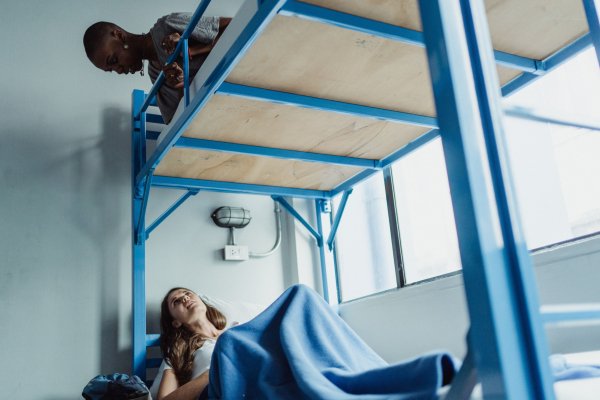
University dormitories in Budapest cost between 45,000 and 90,000 HUF per month, which makes them the cheapest option on paper. In practice, three things limit their usefulness.
Spots are scarce and not guaranteed — demand far exceeds supply at most universities. The application process has strict criteria and deadlines. And comfort levels vary dramatically between buildings, from modern and clean to outdated and crowded.
The real risk is this: if you count on a dorm room and your application is rejected in August, you are entering the private rental market at the worst possible time. That is when every incoming student is competing for the same apartments, prices are at their peak, and the best options disappear within days.
Apply for a dorm if you want to. But have a backup plan ready before the semester starts.
The checklist nobody gives you — what to verify before signing
Most students focus on the monthly rent and miss the things that matter more. Before you sign any rental contract in Budapest, verify these four things.
The landlord has the legal right to rent the property. Ask to see the tulajdoni lap — the official property ownership document. If they refuse, deflect, or say “it is not necessary,” that is your signal to walk away.
The contract is in writing and bilingual. Verbal agreements are not enforceable. A proper lease includes your name, the property address, the monthly rent, the deposit amount, payment terms, and both signatures. If someone offers a “simple arrangement” without paperwork, that is a risk, not a favour.
You know exactly what is included in the rent. In Budapest, utilities are almost never included in the quoted price. Budget an additional 25,000 to 50,000 HUF per month for gas, electricity, water, and internet. In winter, heating costs in older buildings can spike significantly.
The deposit is documented. Standard practice is two months’ rent as a security deposit. Get a written receipt, and make sure the contract states the exact conditions under which the deposit will be returned when you leave.
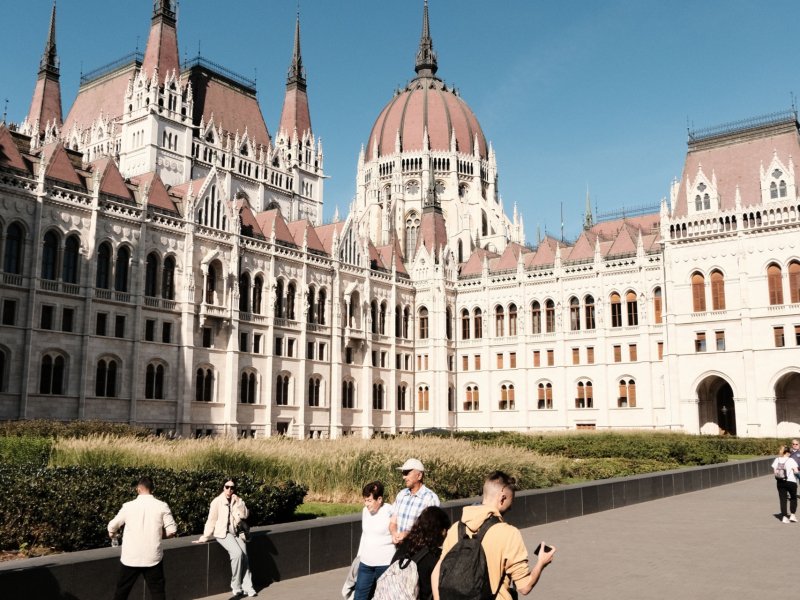
The honest picture of the Budapest student market in 2026
Budapest remains one of the most affordable major university cities in Europe. But it is not as cheap as it was five years ago. Rents have increased, the best apartments at reasonable prices disappear quickly, and landlords have more options than they used to.
The students who consistently land good apartments share a few habits. They start searching six to eight weeks before arrival. They visit the apartment in person before signing — or have someone they trust visit for them. They ask direct, specific questions. And they do not accept vague answers about the lease, the utilities, or the ownership documents.
If you approach the search with realistic expectations and a clear plan, you will find something that works. Budapest is a city that rewards people who do their homework.
FAQ
Q: How much does a student apartment in Budapest cost in 2026? A: Shared rooms in central districts start at around 140,000 to 145,000 HUF per month per person. Private studios begin at approximately 200,000 HUF per month. Districts VIII and IX offer the best combination of price and university proximity.
Q: Which district is best for Semmelweis University students? A: District VIII (Józsefváros) is closest to most Semmelweis faculties and offers the best value for money. District IX is also practical, with strong transport links and a growing number of renovated apartments.
Q: Is it better to live in a dorm or rent privately in Budapest? A: Dorms cost 45,000 to 90,000 HUF per month but spots are very limited. Private apartments give you more independence and a formal written contract. The main upfront cost is the deposit, which is usually two months’ rent.
Q: What documents should I check before signing a lease in Budapest? A: Ask for the tulajdoni lap (property ownership document), a bilingual written contract, and a receipt for any deposit paid. These are standard and non-negotiable in any legitimate rental.
Q: Are utility bills included in Budapest apartment rents? A: Almost never. Budget an extra 25,000 to 50,000 HUF per month for gas, electricity, water, and internet. Winter heating in older buildings can push this higher.
Q: What is the best public transport line for students in Budapest? A: The 4/6 tram runs 24 hours and crosses most of the Pest side. Metro Line 3 connects north to south through the city centre. Living near either of these lines gives you reliable access to universities, shops, and nightlife.
Looking for a student apartment in Budapest?
We work directly with private owners across Budapest — no agency chain, no inflated fees. Whether you need a shared room, a private studio, or something close to a specific faculty, we can help you navigate the market before you even arrive.
Phone / WhatsApp / Telegram: +36204628117